Key Takeaways:
- ICE’s raid on Hyundai has raised alarms among major Asian investors in the U.S., signaling that even aligned partners are not immune to political or regulatory shocks.
- Taiwan—deeply invested in U.S. semiconductor manufacturing through TSMC—faces rising risks amid Trump-era uncertainties on labor, tariffs, and industrial policy.
- To safeguard its strategic semiconductor edge, Taipei must diversify investments, institutionalize economic-security dialogue with Washington, and build resilient linkages with other regional allies.
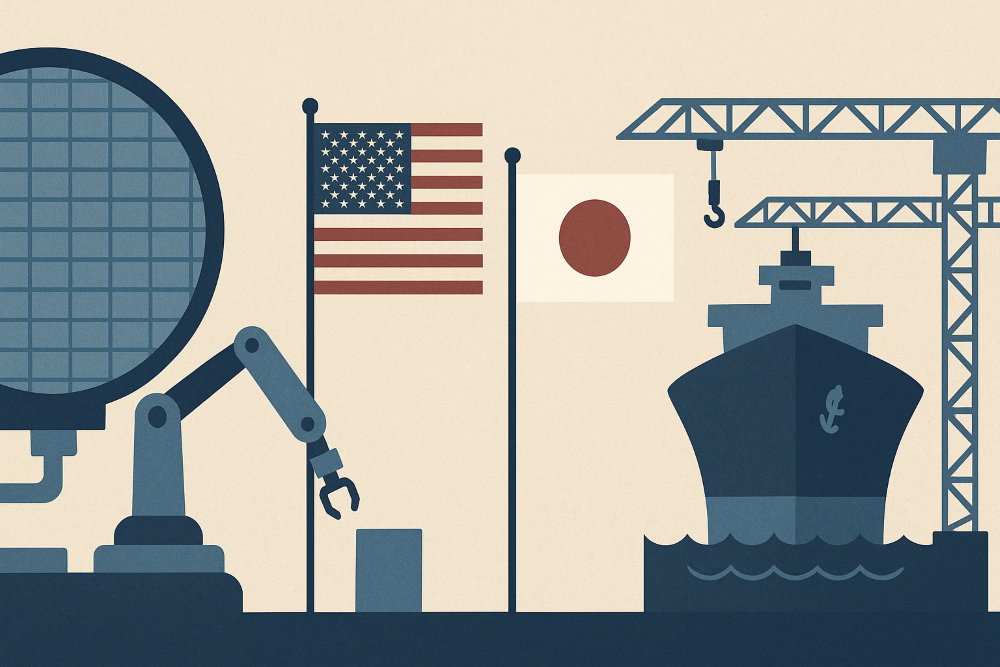
Following the recent immigration raid conducted by the
US Immigration and Customs Enforcement (ICE) on the Hyundai Motor Group’s
offices in September, over alleged labour and immigration violations in its
supply chain, concerns have grown among other industrial partners about how and
to what extent the incident might affect the broader investment and
geopolitical climate. Major investors from US allies such as Taiwan and Japan
are now bracing for potential spillover effects as Washington signals a tougher
stance on border and foreign worker enforcement.
If Hyundai
can face such treatment despite its alignment with US industrial and strategic
goals, what might await Taiwan’s Taiwan Semiconductor Manufacturing Company
(TSMC) or Japan’s semiconductor ventures in the States? While an immigration
inspection might appear to be a routine legal matter, for Taiwan, whose
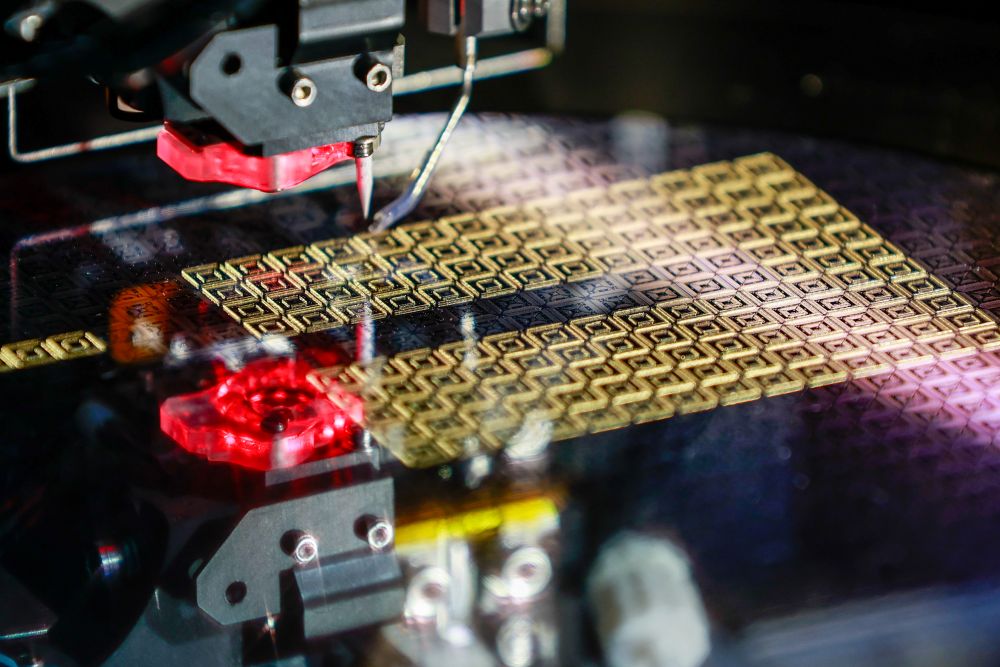
semiconductor champion has invested tens of billions of dollars into its
Arizona fabs, the stakes could not be higher. Taipei should consider
recalibrating its semiconductor investment strategy by diversifying its outward
investment, institutionalising economic-security dialogue, coordinating
regionally with other investor allies, and strengthening domestic capacity to
mitigate any potential backlash from the US political uncertainty under the
second Trump administration on its semiconductor investment.
Taiwan’s
Semiconductor Dilemma in the US
The
enactment of the CHIPS and Science Act in 2022 under the Biden administration
marked a new phase in the US de-risking industrial strategy aimed at attracting
investment from allied partners and diversifying semiconductor supply chains
away from China. The U$278.2 billion act seeks to bolster U.S. manufacturing
capacity for advanced, leading-edge semiconductors currently produced abroad, increase
the supply of mature-node chips, promote research and development within the
semiconductor industry, and create thousands of new domestic jobs[1].
The Act
appeals to giant manufacturing companies such as TSMC and to the Taiwanese
government in deepening economic alignment with the US, given the role
semiconductors have played as a security shield deterring potential aggression
or occupation by Beijing. However, significant challenges remain in sustaining
long-term manufacturing investments. The Arizona fabs, for instance, have
encountered issues, such as workforce safety concerns, a shortage of skilled
labour, differences in work culture between Taiwanese and American employees,
and high operating costs[2].
This
condition has been further amplified by potential uncertainties created by
Trump 2.0. administration, especially on the imposition of high tariffs on
imported chips, as well as possible restrictions on foreign labour employment
stemming from the US’s new immigration policies under the ICE regime. A dilemma
arises for policymakers and semiconductor stakeholders in Taipei, as
withdrawing investments from the US is not a feasible option due to Taiwan’s
geopolitical tension vis-à-vis China, which makes continued economic and
political support from Washington essential. On the other hand, remaining too
deeply invested in the US market requires strategic measures to avoid putting
all of Taiwan’s eggs in one basket, especially amid the resurgence of an ‘America
First’ policy approach.
Diversifying
Taiwan’s Semiconductors Outward Investment
To strengthen
sustainability in semiconductor manufacturing and enhance supply chain
resilience, Taiwan should diversify its overseas investments beyond the US. TSMC
has already expanded production in Japan and Germany, while United
Microelectronics Corporation (UMC) continues to grow its manufacturing and
R&D operations in Singapore. By 2027, Vanguard International Semiconductor
Corporation, a TSMC subsidiary collaborating with Dutch Chipmaker NXP
Semiconductors, is expecting to produce its first batch of chips at its US$7.8
billion wafer fabrication plant in Singapore[3].
Among
several options in European and East Asian countries, Southeast Asia emerges as
a feasible and strategic destination for such diversification for several
reasons. First, the region offers cost-competitive manufacturing environments,
established electronics ecosystems, and increasingly supportive industrial
policies in countries such as Singapore, Malaysia, and Vietnam. Second, their
geographical proximities to Taiwan further enhance logistical efficiency and
access to skilled engineering talent. Third, in the event of a cross-strait
war, the US and its allies, such as Japan and those in Western European
countries, would likely be preoccupied with defending Taiwan. In contrast, many
Southeast Asian nations may adopt a neutral stance, reducing the likelihood of
a complete halt in chip production and thereby sustaining supply chain
resilience[4].
Nonetheless,
challenges such as political instability, poor infrastructure, and a limited
talent pool could constrain efforts to scale up advanced semiconductor
technology. Taiwan, thus, should carefully assess whether the disadvantages of
expanding manufacturing in Southeast Asia may outweigh the potential benefits.
Institutionalising
Economic-Security Dialogues and Coordinating Regionally
One way
Taipei can ensure more predictable investment conditions is by advocating for
the establishment of a formal US-Taiwan Economic Security Dialogue. This
framework could include dispute-resolution mechanisms and clear rules governing
subsidy compliance. Although high-level official dialogues are unlikely due to
the One China policy and the absence of formal diplomatic relations,
institutions such as the American Institute in Taiwan (AIT) and the Taipei
Economic and Cultural Representative Office (TECRO) in Washington, DC, could
act as effective intermediaries to facilitate such exchanges. In addition, Track
1.5 and Track 2 dialogues on economic security should also be pursued to deepen
mutual understanding between Taipei and Washington.
Another channel
that Taiwan can utilise is regional coordination with other US allied
industrial partners, such as South Korea and Japan. A trilateral investment
forum could be organised under a regional economic framework, where Taiwan is a
member, including the Asia-Pacific Economic Cooperation (APEC). Such an
investor alliance could facilitate regular consultations on regulatory trends
and labour compliance issues affecting their investments. This minilateral
economic bloc would help build solidarity and strengthen its collective
bargaining position in relation to the US investment climate.
Strengthening
Semiconductor Domestic Capacity
While
diversifying its semiconductor investment abroad, Taiwan should also strengthen
its domestic production capacity by investing in workforce training, R&D
incentives, and next-generation technologies such as advanced packaging and
photonics. By focusing on its domestic capacity, Taiwan can also sustain its
talent pipeline for both domestic and overseas chip industries, particularly by
recruiting young professionals from Southeast Asian countries who have been
educated in Taiwan. TSMC, for example, has been actively recruiting talented
students from Southeast Asia and India to gain working experience through
internships.
Another
domestic aspect that requires attention is providing subsidies and incentives
to encourage a sustainable domestic supply chain. While the introduction of the
Industrial Innovation Statute in 2023 opened a new window of opportunity to
boost domestic capacity by offering tax incentives and funding to drive
technology advancement, the act should be more thorough in supporting domestic
and medium-scale firms[5]. Such efforts would help
sustain Taiwan’s position as a global leader in semiconductor technology,
thereby enhancing its geopolitical and economic leverage amid rising pressure
from China.
[1] Emily Benson, Japhet Quitzon, and William A. Reincsh, Securing
Semiconductor Supply Chains in the Indo-Pacific Economic Framework for
Prosperity: Squaring the Circle on Deeper Cooperation, CSIS, May 2023, https://www.csis.org/analysis/securing-semiconductor-supply-chains-indo-pacific-economic-framework-prosperity
[2] Michael Sainato, ‘They would not listen to us’: inside Arizona’s
troubled chip plant, The Guardian, 28 August 2023,https://www.theguardian.com/business/2023/aug/28/phoenix-microchip-plant-biden-union-tsmc
[3] Elyssa Lopez, TSMC subsidiary to co-build $7.8b Singapore chip
wafer plant, Tech in Asia, 5 June 2024, https://www.techinasia.com/nxp-tsmcbacked-vanguard-plan-78-billion-chip-plant-construction-singapore
[4] Chin Shueh, How Taiwan-ASEAN Semiconductor Cooperation Can Bolster
Taipei’s National Security, The Diplomat, 23 December 2023, https://thediplomat.com/2023/12/how-taiwan-asean-semiconductor-cooperation-can-bolster-taipeis-national-security/
[5] Monica Chen, Rodney Chan, Taiwan ‘Chips Act’ to benefit only a few
companies, Digitimes Asia, 29 March 2023, https://www.digitimes.com/news/a20230328PD213/chips-act-ic-design-ic-manufacturing-taiwan-tsmc.html
Ratih Kabinawa is an Adjunct Research Fellow at the University of Western Australia and a Research Fellow at Forum Sinologi Indonesia. She earned her doctoral degree in International Relations and Asian Studies from the University of Western Australia. Her research interests include Taiwan’s foreign policy, Taiwan-Southeast Asia relations, geopolitics, labour migration, and the diplomacy of non-state actors. She was a Taiwan MOFA Visiting Research Fellow and Taiwan Foundation for Democracy Postdoctoral Research Fellow.