Key Takeaways:
- Prime Minister Takaichi is simultaneously boosting Japan’s independent defense autonomy (including counter-strike capabilities) while also reinforcing the U.S. alliance by accepting a greater strategic burden.
- She is employing "pragmatic nationalism," balancing her conservative domestic credentials with a functional foreign policy that prioritizes operational cooperation (e.g., with South Korea) over historical disputes.
- Japan is prioritizing flexible "lattice-like" security networks (like the Quad and partnerships with Australia and the Philippines) as its key strategic tool, viewing the U.S.-Japan-ROK trilateral as important but operationally limited.
The election of Sanae Takaichi as the 104th Prime Minister of Japan on October 21, 2025, marks a pivotal moment with wide-ranging implications for Japanese domestic policy and East Asian security architecture. Known for her staunch conservatism and alignment with former Prime Minister Shinzo Abe’s strategic vision, Takaichi’s leadership is expected to accelerate Japan’s ongoing evolution toward enhanced defense autonomy, expanded diplomatic initiatives, and recalibrated alliance politics. This analysis explores the trajectory of the Takaichi administration’s security strategy, its impact on historical narratives and diplomatic relationships, and the strategic prospects for trilateral cooperation among the United States, Japan, and South Korea.
The Takaichi Administration: Core Security Policy Directions
Takaichi enters office with a well-defined, three-part security agenda: reinforcing the U.S.-Japan alliance, building Japan’s independent defense capacity, and growing multilateral security networks rooted in flexible regional partnerships.
1. Strengthening the U.S.-Japan Alliance
A cornerstone of Takaichi’s foreign and security policy is deepening the U.S.-Japan partnership, a move made ever more urgent by shifting U.S. strategic priorities. The re-election of Donald Trump has introduced renewed ‘America First’ imperatives, pushing allies in the Indo-Pacific to shoulder greater security responsibilities. Takaichi has responded proactively, emphasizing Japan’s readiness to fill gaps in regional deterrence and to accept a larger strategic burden as a reliable ally. At her first summit meeting with the U.S. President, she committed to a substantial increase in defense expenditures—a policy move that echoes Abe’s earlier efforts to recalibrate the alliance toward greater Japanese initiative.
Japan’s pledge to function as a ‘security anchor’ signals a willingness to become a more equal partner in alliance management. Key measures include increased host-nation support, acquisition of advanced defense systems, and tighter integration with U.S. forces in force posture, command and control, and joint operations. These steps reflect Japan’s determination to diversify alliance roles beyond transactional burden-sharing toward proactive strategic participation.
2. Enhancing Japanese Defense Autonomy
Beyond alliance considerations, Takaichi’s administration is pursuing comprehensive reforms to build Japan’s sovereign military power. She has fast-tracked legislative revisions of Japan’s ‘three security documents’—the National Security Strategy, National Defense Strategy, and Defense Buildup Program, originally marshaled during Abe’s premiership. These reforms are expected to institutionalize counter-strike capabilities that allow Japan to pre-empt and deter regional threats, including those posed by North Korea and China.
Boosting defense industry competitiveness is central to this agenda. Takaichi aims to stimulate defense R&D, expand procurement of indigenous and joint-developed systems, and foster technology partnerships with American, European, and Indo-Pacific allies. By advancing the ‘normal state’ agenda, Japan seeks not only to reinforce its military self-reliance but also to position itself as a core hub in regional collective defense architectures.
3. Expanding Multilateral Security Networks
Takaichi’s signature innovation lies in her emphasis on ‘lattice-like’ multilateral frameworks. This approach leverages Japan’s relationships with like-minded states—Australia, India, the Philippines, South Korea, the UK, and Canada—to build flexible security networks that supplement the core U.S.-Japan alliance. Minilateral cooperation mechanisms such as the Quad (U.S.-Japan-Australia-India), as well as emerging trilateral and quadrilateral formats involving the Philippines, demonstrate Japan’s intent to create a web of security relationships calibrated to respond to diverse regional contingencies.
Such frameworks facilitate information sharing, joint exercises, and interoperability on maritime, cyber, and space security concerns. By distributing security burdens and pooling capacities, Japan is able to hedge against uncertainties in traditional alliances while contributing to the shaping of a robust, rules-based regional order.
Historical Narratives and Diplomatic Calculus
Takaichi’s conservative political credentials are underscored by her views on historical memory and her connection to Japan’s nationalist political base. Her regular visits to the Yasukuni Shrine and strong rhetoric on historical issues have heightened unease in China and South Korea, countries that remain sensitive to Japan’s wartime legacy.
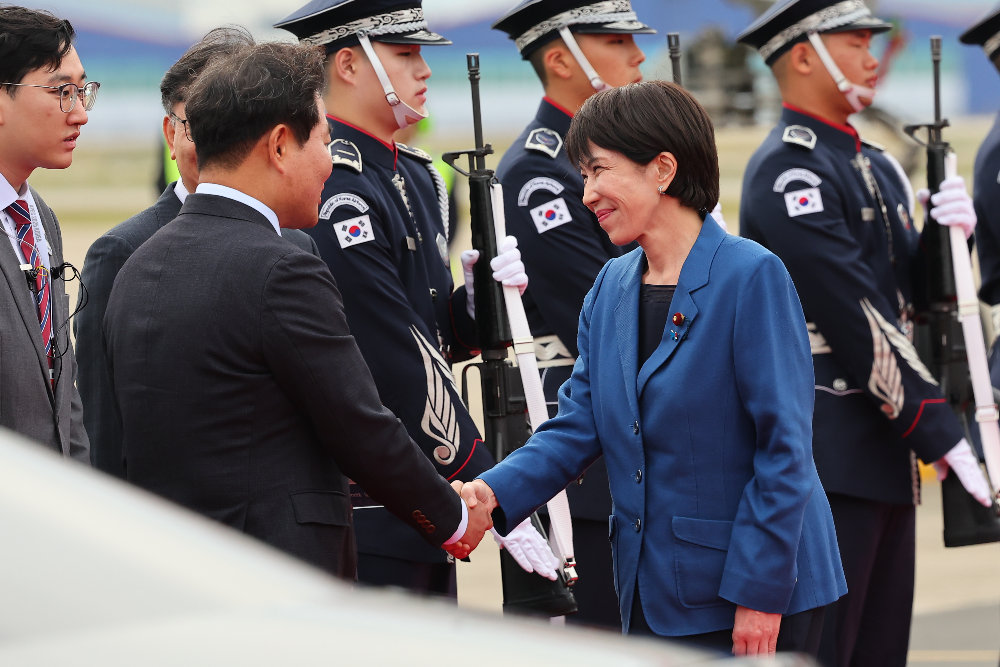
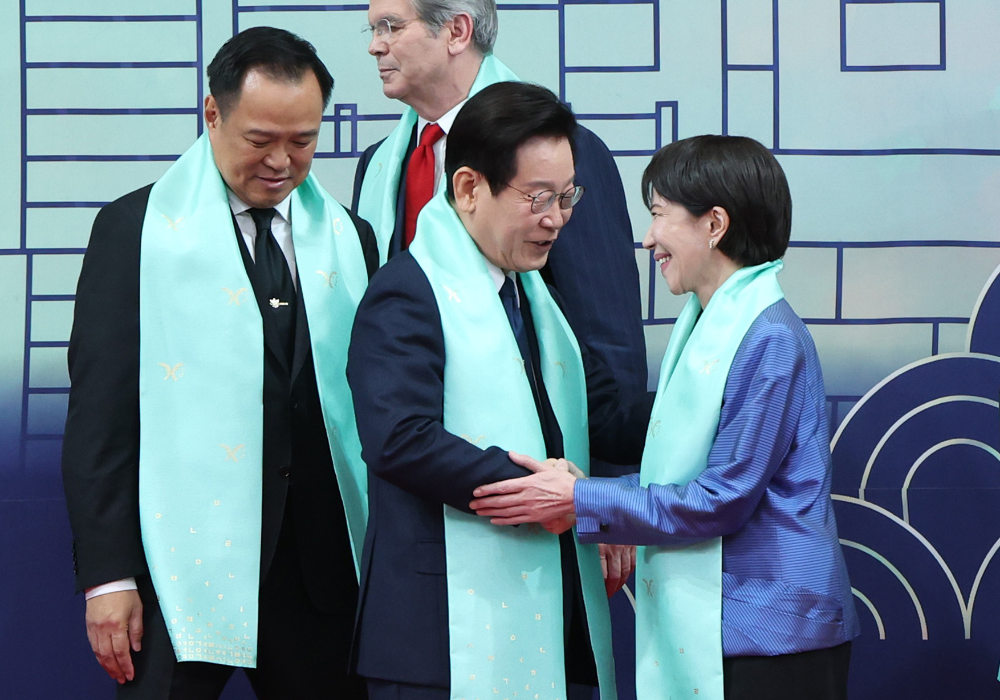
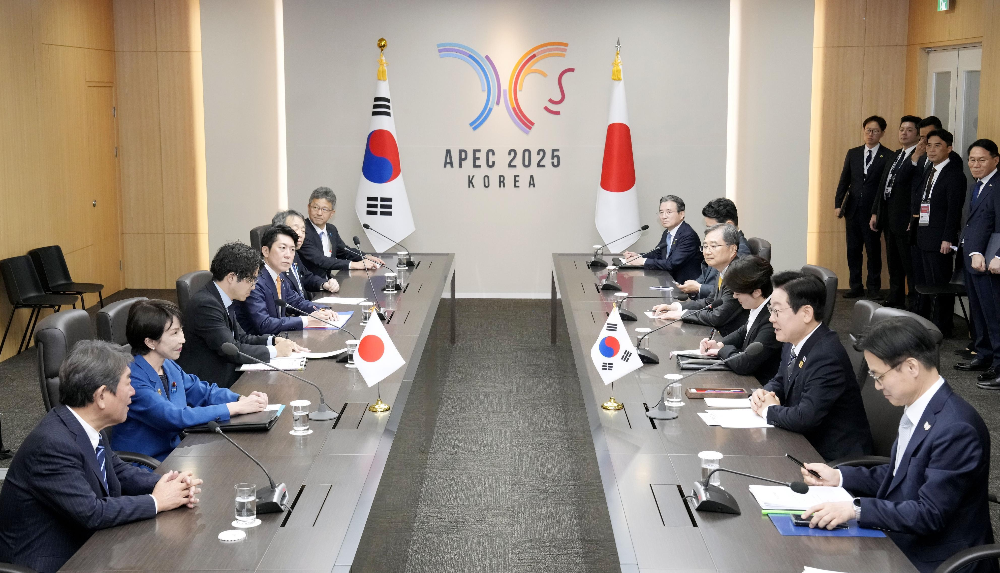
However, her pragmatic instincts have become evident since assuming office. By abstaining from the annual Yasukuni autumn festival visit after her inauguration, Takaichi signaled restraint to avoid exacerbating diplomatic frictions with neighboring states. The October 30 summit with South Korean President Lee Jae-myung notably sidestepped historical controversies, prioritizing operational cooperation in security and supply chain resilience.
This ‘pragmatic nationalism’ reflects a dual-track strategy—maintaining conservative political legitimacy at home while sustaining functional diplomatic engagement abroad. Yet, this balance remains precarious. Should domestic approval ratings falter, Takaichi could recur to symbolic gestures, such as Yasukuni visits, to rally her base—thereby potentially triggering renewed historical disputes and complicating trilateral or multilateral coordination.
By contrast, the Japan-China summit on October 31 highlighted the limitations of pragmatic accommodation. Chinese leadership insisted on continued Japanese reflection on historical issues, while Japan asserted its security concerns regarding Chinese activities in the East and South China Seas. Both sides agreed on basic crisis management protocols, but underlying strategic rivalry and historical discord persist as structural features of the bilateral relationship.
Prospects for U.S.-Japan-ROK Trilateral Security Cooperation
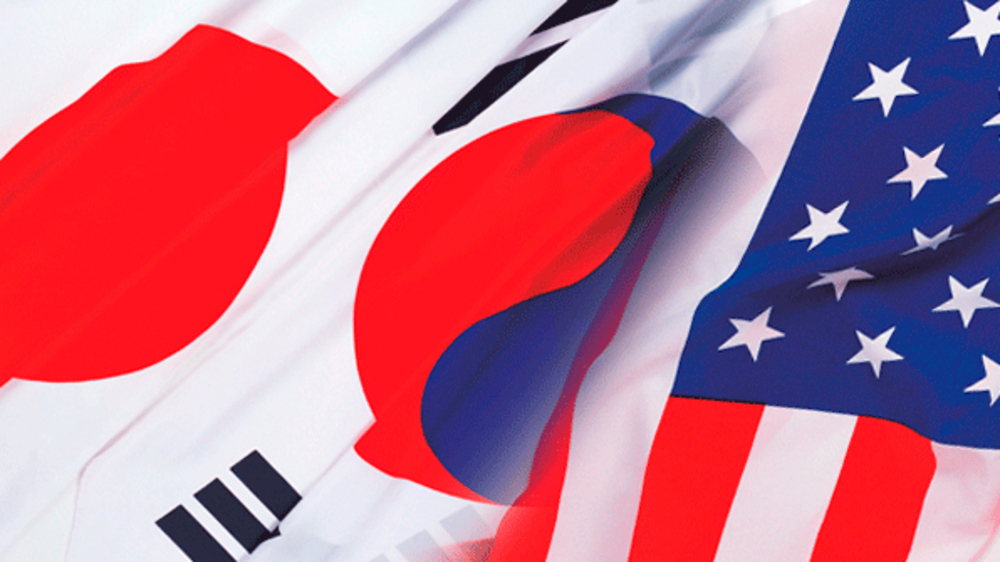
The future trajectory of trilateral security cooperation among Washington, Tokyo, and Seoul will be shaped by these evolving strategic and historical dynamics. Under Takaichi, the U.S.-Japan alliance will serve as Japan’s primary vehicle for regional security engagement. Partnership with South Korea will remain important for operational purposes—notably intelligence sharing, missile defense, and joint response to North Korean provocations.
Yet, geopolitical constraints will impede trilateral deepening, particularly as the South Korean government’s stance on China and the U.S.-Japan-centered Indo-Pacific strategy remains cautious and ambiguous. For strategic deterrence against China, Takaichi is prioritizing complementary multilateral coalitions: notably stronger security integration with the Philippines and Australia. These networks are crucial for contingency planning on Taiwan, maritime security, and joint base access.
Overall, Takaichi’s policy combines continuity with Abe-era reforms and a flexible pragmatism suited to the current regional order. The U.S.-Japan alliance will remain the backbone of Japanese security, but enhanced multilateral arrangements—both minilateral and trilateral—will grow in strategic prominence as Tokyo adapts to new challenges.
Substantial opportunities for deeper trilateral cooperation will arise in response to regional crises. Major North Korean provocations or emergent tensions in the Taiwan Strait could prompt closer operational coordination among Japan, the U.S., and South Korea. Takaichi’s administration is likely to view such moments as openings for institutionalizing a Japan-led, networked Indo-Pacific defense architecture.
Conclusion
The Takaichi administration signifies a new phase in Japanese security strategy, characterized by intensified defense reforms, sophisticated alliance engagement, and ambitions to shape evolving regional partnerships. While historical tensions continue to constrain diplomatic maneuvering with China and South Korea, Japan’s pragmatic recalibration under Takaichi demonstrates a preference for operational effectiveness and strategic adaptability. The future of trilateral security cooperation in Northeast Asia will depend on the careful management of historical disputes, domestic political pressures, and the capacity of regional leaders to respond to looming security challenges through institutional innovation and coalition building.
Dr. Lee Kitae currently serves as a Senior Fellow at Sejong Institute in Seoul, South Korea. He obtained his Ph.D degree from Keio University, majoring in Political Science. He was a Post-doc fellow at BK21 Research Project for Department of Political Science & International Studies of Yonsei University from 2012 to 2013; a lecturer at Seoul National University, Yonsei University, Duksung Women’s University, and Korea Military Academy from 2012 to 2015; a research fellow at Yonsei Institute for North Korean Studies from 2013 to 2014; research fellow at Institute of Japanese Studies of Kookmin University from 2014 to 2015; a Director of Global Strategy Research Division at the Korea Institute for National Unification(KINU) from 2015-2024. His main area of research interest is Japanese Security Policy, International Relations in East Asia, and North Korea-Japan Relations.