- #Japan
- #Multilateral Relations
- #South Korea
- #US Foreign Policy
Key Takeaways:
- Accelerated Strategic Revision: Driven by the deepening military alignment between Russia, China, and North Korea, alongside the unpredictability of U.S. leadership under Donald Trump, Prime Minister Takaichi has expedited the revision of the National Security Strategy and the increase in defense spending.
- Diversification of Security Partnerships: While the U.S. alliance remains Japan’s indispensable nuclear deterrent, the new strategy emphasizes diversifying partnerships with other like-minded nations to fill the security "void" created by declining U.S. soft power and consistency.
- Urgency of Japan-Korea Cooperation: The Japan-Korea relationship is identified as the "weakest link" in the trilateral security architecture. To counter regional threats effectively, the two nations must move beyond mere consultation to an action-oriented partnership, potentially framed within a shared vision for a Free and Open Indo-Pacific (FOIP).
1. Start of the Review of Japan’s National Security Strategy With the launch of the new coalition government in October, Japan’s new Prime Minister, Sanae Takaichi, pledged to revise the National Security Strategy to address the most severe and complex security environment surrounding Japan since the end of World War II. She also vowed to increase Japan’s defense spending to 2% of GDP by Fiscal Year 2025, two years earlier than the original schedule.
This article discusses the following three points: first, the shift in the security environment driving these decisions; second, the prospects for the revision of Japan’s strategy; and finally, where the Japan-Korea security partnership should be positioned within this strategic review.
2. Shift in the Strategic Environment Involving Japan in Recent Years The current National Security Strategy was established in December 2022. It had already recognized that the security environment was the most severe and complex it has been since the end of WWII. The major shifts since then are summarized as follows:
- First, the strengthening of partnerships between Russia, China, and North Korea. China and North Korea have been supporting Russia’s war in Ukraine. In return, North Korea has benefited from Russian assistance. Furthermore, China and Russia have increased joint operations in Japan’s vicinity and other regions, including the Arctic.
- Second, the confusion caused by the reemergence of Donald Trump as U.S. President. The U.S. has become inconsistent and unpredictable. It is losing its soft power, which inevitably undermines its hard power.
- Third, increasingly skillful hybrid warfare. The dividing line between war and peace, as well as between military and non-military domains, is becoming blurred. Anything can be easily weaponized, and threats are now omnipresent and constant.
Indeed, these are shared challenges for both Japan and the Republic of Korea.
3. Prospects for the Basic Pillars of the Strategy In recent years, Japan’s national security policy has rested on three pillars: Japan’s own self-defense capabilities; the alliance with the U.S.; and international partnerships with like-minded countries.
These three will continue to serve as the central pillars. While the credibility of the alliance with the U.S. may be debatable, no country other than the U.S. can extend a nuclear umbrella to Japan, and Japan’s own nuclearization would not make strategic sense. Thus, the alliance with the U.S. remains indispensable for Japan.
However, diversifying security partnerships is necessary to fill the void the U.S. is leaving. Partnerships with as many like-minded countries as possible are indispensable, particularly as the world becomes more connected than ever before. Accordingly, the dividing line between alliance cooperation with the U.S. and security partnerships with other like-minded countries is becoming much less distinct. Both the Japan-Korea-U.S. trilateral partnership and the Japan-Korea bilateral partnership must be strengthened with this reality fully in mind.
4. The Japan-Korea Security Partnership As Northeast Asia is particularly dangerous due to large stockpiles of nuclear arms and the collusion of three autocracies, a closer partnership between Japan and Korea is more important than ever.
The Japan-Korea-U.S. trilateral partnership is approaching the level of an alliance. The "Spirit of Camp David" of August 2023 contains a particularly important clause. In this joint statement, the leaders of the three countries announced their governments’ commitment to consult expeditiously to coordinate responses to regional challenges, provocations, and threats affecting their collective interests and security. While similar clauses are found in the Japan-Australia Joint Declaration on Security Cooperation (October 2022) and the Hiroshima Accord between Japan and the U.K. (May 2023), the language in the Spirit of Camp David is the most advanced and detailed. Although the three leaders who convened at Camp David in August 2023 are no longer in office, this achievement should not be relegated to history; it must be kept alive.
In her policy speech before the National Diet on October 24, Prime Minister Takaichi declared that the government of Japan will deepen multilateral security consultations—such as Japan-U.S.-Korea, Japan-U.S.-Philippines, and Japan-U.S.-Australia-India—with the Japan-U.S. Alliance as the cornerstone. The weakest link in the Japan-U.S.-Korea triangle is the Japan-Korea relationship. It must be strengthened; otherwise, the triangular partnership cannot be enhanced. The two countries must go beyond mere consultation. An action-oriented, principled approach is essential.
Prime Minister Takaichi also noted in her policy speech that the Japanese government intends to enhance partnerships with like-minded countries sharing fundamental values under the vision of a Free and Open Indo-Pacific (FOIP). She added that the government intends to evolve this vision with the times. Both countries should capitalize on this opportunity, as the FOIP vision is worth sharing between them.
The Indo-Pacific is a vast maritime domain. As a resident power, Japan is defined as a maritime country in the National Security Strategy. In fact, Japan depends on the sea for its survival and prosperity. This is not, however, unique to Japan. Korea is a prime example: it is surrounded by the sea on three sides and connected to all its trading partners—including its largest one—via the sea, not by land.
While the concept of FOIP is gaining popularity in the international community, Japan’s specific vision is not necessarily well-defined. If this vision continues to be the basic principle of Japan’s international partnerships, Japan should consult with close partners, including Korea, on the ends, ways, and means of the vision so that the FOIP concept is more widely shared.
A sense of community and a habit of cooperation are growing in East Asia. Both countries must capitalize on this momentum. A common threat perception is also rising in the region. Emerging threats pose a significant challenge to the rules-based international order built upon the rule of law. Indeed, maintaining this order is the objective of the FOIP vision. The Japan-Korea security partnership should be framed in this context during the Japanese debate on the revision of the National Security Strategy.
The first National Security Strategy of 2013 placed the security partnership with Korea at the top tier of the third pillar (international security partnerships). The current strategy document of 2022 is unclear regarding priority within the third pillar, but the 2022 National Defense Strategy lowered Korea’s priority, reflecting the deterioration of bilateral relations due to historical issues. Korea was listed after Australia, India, European countries, NATO, and the EU. While one should not be overly concerned with the order of descriptions—as all like-minded countries are important in their own right—it is impossible to forecast the ranking in the next strategy document. The bilateral relationship will remain sensitive, and careful management will continue to be necessary.
However, it is high time for the two countries to conduct candid dialogue at the outset of the new leadership in Tokyo to identify common goals and to translate that dialogue into practical cooperation.
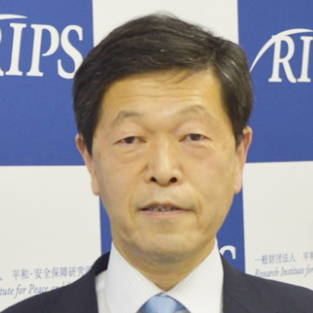
Mr. Hideshi TOKUCHI served as Japan’s first-ever Vice-Minister of Defense for International Affairs from 2014 to 2015 after completing several senior assignments in the Ministry of Defense, including the Director-General of Defense Policy Bureau, of Budget and Equipment Bureau, of Personnel and Education Bureau, and of Operations Bureau. He has been the President of the Research Institute for Peace and Security (RIPS), an independent think-tank in Tokyo, since 2021. He often writes and speaks about issues related to Japan’s national security policy and East Asian regional security. He is teaching Japan’s foreign and security policy at Sophia University. He earned his Bachelor of Laws degree from the University of Tokyo in 1979, and his Master of Arts in Law and Diplomacy (M.A.L.D.) degree from the Fletcher School of Law and Diplomacy in 1986.