- #Global Issues
- #Technology & Cybersecurity

Key Takeaways:
- Geopolitical & Criminal Fusion: The proliferation of "scam compounds" in Cambodia, Myanmar, and Laos is driven by the migration of Chinese organized crime into authoritarian states, where they leverage citizenship-by-investment schemes and post-pandemic real estate distress to establish secure criminal enclaves.
- Corporate-Style Evolution: These criminal enterprises have evolved into multinational corporate structures where Chinese syndicates act as "masterminds" managing profits, while local gangs oversee operations and coerced victims (often trafficked under false employment pretenses) execute the scams.
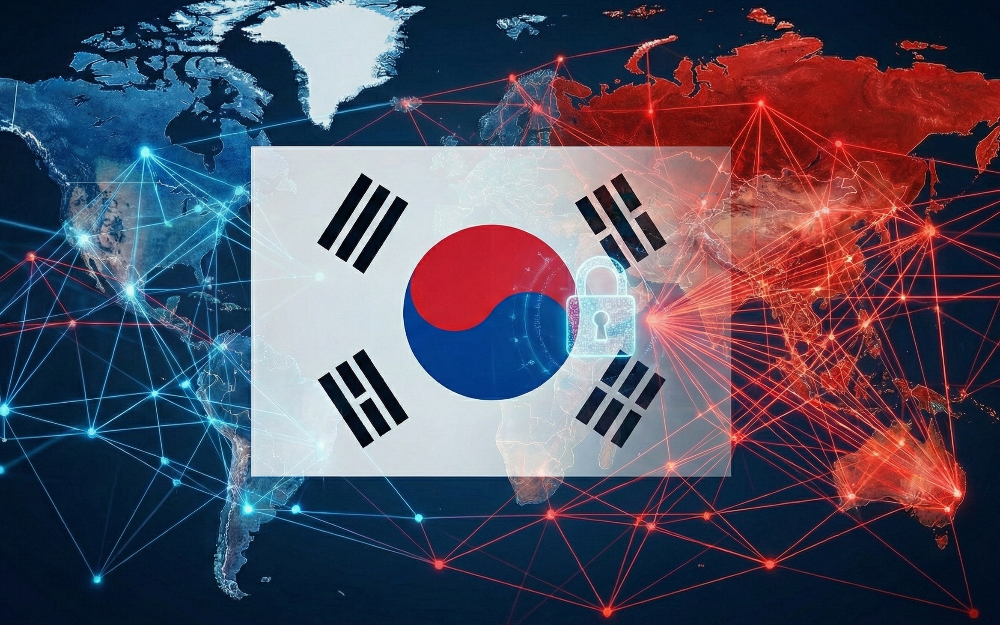
- Transnational Security Response: Recognizing that this has escalated from a domestic issue to a global security threat involving human trafficking and money laundering across 16 countries, South Korea has established a "Special Unit" in Cambodia and initiated international cooperation frameworks like "Breaking Chains."
A recent
spate of violent crimes targeting South Koreans in Cambodia has provoked
widespread outrage and mounting calls for prompt action. The South Korean
government issued a special travel advisory and initiated an all-out response
in cooperation with the Cambodian government. The establishment of a "Special
Unit for Korea" within the Cambodian police force on 10 November 2025
marked a significant development in the ongoing efforts to combat transnational
crime. In addition, the initiative titled Breaking Chains, in
collaboration with over 10 countries and international organizations, including
the United States, the United Nations Office on Drugs and Crime (UNODC), and
the Association of Southeast Asian Police Forces (ASEANAPOL), underscores the
commitment to international cooperation in addressing online scams and related
crimes. The issues currently unfolding in Cambodia indicate the emergence of a
new type of security threat, rather than isolated incidents targeting
individual victims. The criminal problem that has threatened the safety of
citizens has now evolved into a regional security threat, and moreover, a
global security threat.
Scam
Compounds in Southeast Asia: A Fusion of Organized Crime and Geopolitics
At
present, the hubs for scam crimes targeting the entire world are primarily
located in Southeast Asia. Since such entities are known to engage in the
commission of cyber-fraud, such organizations are also referred to as 'scam
complexes', 'scam compounds' or 'scam centers'. It is evident that online scams
are not a phenomenon unique to Southeast Asia. However, the online scams in
Southeast Asai, centered in Cambodia, Myanmar, and Lao PDR, have unique
feature, a combination of organized crime and geopolitics.
The
formation of collective crime complexes centered in Southeast Asia, which specialize
in online scams, can be largely attributed to three factors. The primary factor
contributing to this phenomenon is the influx of Chinese criminal organizations
into the region. It is evident that foreign background organized crime
perpetrates illegal activities targeting the same background diaspora. However,
the case of online scams in Southeast Asia is distinct. This is due to the fact
that it involves the migration of criminal organisations under the guise of
investment. In response to the intensified enforcement measures by the Chinese
government against online gambling, organized crime operating within this
sector have relocated to Southeast Asian countries that share a border with
China. Initially, these criminal organisations relocated to countries such as
Thailand; however, as the scale of their illegal activities expanded, they sought
out more secure locations for operation. The objective of these actors was to establish
a stable breeding ground for crime by leveraging infrastructure investments,
including real estate, and citizenship-by-investment schemes.
The second
factor is indicative of the persistent political instability and the
maintenance of authoritarian regimes in Southeast Asia. In the case of
Cambodia, the Cambodian People's Party (CPP) has been accused of monopolizing
power and maintaining an authoritarian system that suppresses opposition
parties, civil society, and the media. In the process of seeking funding
sources for power succession and maintenance, a citizenship-by-investment
scheme was introduced, which resulted in an influx of organized crime. As these
organizations became patrons of the authoritarian regime, the corruption of
public authority – a typical type of transnational crime – combined with online
scams. A similar situation is observed in Myanmar, which has emerged as a
significant hub for online scam crimes subsequent to Cambodia. The ongoing
political turbulence and pervasive insecurity that ensued subsequent to the
2021 military coup have collectively engendered a milieu conducive to the
proliferation of online fraudulent activities.
Finally,
the impact of the pandemic caused by the Covid-19 pandemic must be considered.
The global spread of the novel virus, Covid-19, has precipitated a profound
digital transformation. This has resulted in a significant shift in many
individuals' day-to-day activities, with a considerable proportion of these
activities now being conducted within online spaces. The digitalisation of
daily life also resulted in a considerable expansion of the operational arena
for organized crime into the online sphere. This has led to the creation of an
environment conducive to a substantial increase in online scams. Concurrently,
the quarantine measures implemented to curtail the spread of the Covid-19 had
particularly deleterious consequences in authoritarian states. Consequently,
numerous facilities with the capacity to accommodate large groups encountered
financial challenges, prompting Chinese organized crime to acquire undervalued
real estate. These Chinese organized crimes began to establish connections with
local organized crimes, leading to a diversification of scam s, perpetrators,
and victims. Concurrently, there was an increase in demand for personnel to
participate in these crimes. It is evident that resorts, casinos, and urban
apartment complexes acquired by organized crimes provide a stable environment
for the scams. Consequently, a criminal ecosystem was established that had the
capacity to accommodate a significant number of individuals concurrently and
was isolated from external access.
Multinational
corporate transformation of organized crime and the evolution of the criminal
business model
The
formation of a stable criminal ecosystem provided the foundation for online
scam organizations to diversify their operations and seek various types of
victims. This development subsequently led to a three-stage evolution of their
criminal business model. At the inception of Chinese criminal organizations'
presence in Southeast Asia, their primary objective was the operation of
illegal gambling websites targeting their own citizens in mainland China.
Consequently, the perpetrators were identified as Chinese nationals from the
mainland, while the victims comprised individuals engaged in online gambling
activities located within the same geographical region. The second stage
occurred during the period of the Covid-19 pandemic. During the pandemic, as
profits from online gambling sites decreased due to the Chinese government's
cryptocurrency regulations, they modified their business model to pursue more
sophisticated and fabricated online scams. While Chinese organized crimes
remained the primary perpetrators, the victims expanded beyond mainland China
to include individuals from countries within the region. The geographical
distribution of these fraudulent enterprises has been observed to extend from
China's border regions to countries such as Cambodia and Myanmar.
In the
present third phase, there is evidence to suggest that Chinese organized crimes,
local organized crimes or gangs, and organized crimes from other countries are
combining to form a multinational corporate structure. The nature of online
scams has become increasingly diverse, encompassing a wide range of fraudulent
activities. These include voice phishing, investment fraud, stock market pump-and-dump
schemes, romance scams, and recently, employment scams with human trafficking.
In order to attract victims from a range of nationalities, fraudulent scenarios
are being developed on a daily basis, with consideration given to the cultural,
social, and linguistic characteristics of the target countries. It is evident
that online scam organizations do not exclusively prioritise fraudulent
activities. There is a growing body of evidence to suggest that these groups
are rapidly integrating with traditional transnational crime areas, such as
drug trafficking, human trafficking and corruptions. In a manner analogous to
the pursuit of business diversification by corporations, organized crimes too
explore various avenues for expansion.
A further
division of labour is emerging, based on the origin of the scammers in the
organization. Chinese organized crimes have been identified as the high-level
actors of the fraudulent ecosystem. These groups have been observed to acquire
citizenship in the host country for the purpose of establishing permanent
residence. They then function as the "masterminds" of the operation,
overseeing the management of the bases and the distribution of profits.
Concurrently, local organized crimes establish an organizational structure that
oversees direct operations. Furthermore, evidence suggests that organized crimes
from other countries are also integrated as sub-organizations in order to
attract victims. It is important to note that the perpetrators of such crimes
do not necessarily come from traditional organized crimes. This phenomenon
encompasses individuals who, having already been enticed into online fraudulent
schemes, proceed to seek new victims within their personal networks. It is also
important to note cases where some victims arriving in Cambodia are coerced and
threatened by local organizations into participating in online scams. This
finding suggests the presence of an overlap between the victims and
perpetrators.
Scam
Pandemic from the Global Spread of Cybercrime from Southeast Asia
The case
of online scams in Southeast Asia demonstrates that crimes, typically perceived
as domestic issues, have the potential to escalate into threats to
international security. Concurrently, it demonstrates how a domestic security
concern can evolve into a matter of foreign policy.
As of
2024, Cambodia is not the only Southeast Asian country in which criminal
activities involving Chinese and local organized crimes have been detected.
Myanmar and Laos are significant hubs for online scams, as are the Philippines,
Thailand, Malaysia, Vietnam, and Singapore. The phenomenon of extensive damage
is occurring not only in Southeast Asia but also in East Asia, throughout Europe,
Africa, the Middle East, and the Americas. The profits generated from online
scams are routed through or accumulated in 16 countries, including adjacent
Southeast Asian nations, as well as the United Arab Emirates, Uganda, and
Kazakhstan. In a manner analogous to the advent of Southeast Asian scam
compounds in the aftermath of the global pandemic of the Covid-19, online
fraudulent activity is proliferating on a transnational scale.
Challenges
and the Way Forward
As
articulated by a police officer formerly deployed to Korean Desk in the
Philippines, "evil is diligent." In a manner akin to bona fide
actors, fraudulent activities perpetrated online are perpetually and
methodically evolving. In order to combat the proliferation of online scams,
including those operating within the Cambodian context, a multifaceted, organized,
and diligent response is imperative. The notion of evil as a concept that is
characterized by diligence prompts the question of how individuals and
societies ought to respond to it.
The swift
and certain punishment of perpetrators of scams that have already occurred is
essential for delivering justice and as a preventive measure against similar
incidents. In the context of mutual legal assistance, it is imperative to
consider diplomatic and security measures that can elicit active cooperation
from Cambodian authorities. Concurrently, measures for the recovery and support
of victims of Cambodian online scams must be deliberated. In view of the constantly
evolving nature of online scams, there is a need for continuous collection of
trend information and consistent tracking of their potential links with
domestic organized crimes. While the response to scams themselves is important,
an effective response must also include the eradication of other types of
crimes that frequently accompany scams. In this regard, the establishment of whole-of-government
approach against online scams and the creation of a coordination agency also
need to be considered.