- #North Korea
Key Takeaways:
- All belligerents in The Korean War suffered from cognitive biases – including Hostile Attribution Bias, Oversensitivity to Consistency, and Overcentralization of Decision-making – that led to misjudgment and escalation.
- Similar cognitive biases – including Hostile Attribution Bias, Egocentric Bias, Confirmation Bias, Scope Neglect Bias, and Illusion of Asymmetric Insight – have produced similarly destructive escalatory dynamics in The Russo-Ukraine War.
- Contemporary Northeast Asia is a potent cauldron of bias – Over/Under Centralization of Decisionmaking, Plan Continuation Bias, Hot-Cold Empathy Gap, and Hyperbolic Discounting – that could once again bring a destructive conflict to Asia. Relationships, precedents, and spillover effects from The Russo-Ukraine War have further aggravated the situation.
- To avoid misperceptions that feed miscalculation and escalation, it is essential to learn from this history to understand and mitigate the effects of bias on national security policymaking.
Biases in The Korean War
Cognitive biases are described as “mental errors caused by our simplified information processing strategies,” by Richards J. Heuer, a CIA veteran and author of Psychology of Intelligence Analysis. In matters of war and peace, biases often make it difficult for belligerents to understand one another’s threat perceptions and risk tolerance. Such was the case in the The Korean War, which emerged from, escalated, and extended thanks to bias.
Overcentralization of Decision-making is the tendency to group actors together and interpret their actions as centrally, or hierarchically, directed, even when that is not the case. In The Korean War, U.S. analysts failed to perceive how the initiative could arise not from the top-down of the Communist World, but rather from the bottom-up. Specifically, just a few days before Kim Il Sung’s invasion of South Korea, the CIA assessed that North Korea is a “firmly controlled Soviet Satellite that exercises no independent initiative…” American analysts correctly believed that the Soviet Union’s desire to avoid direct war against the U.S., but was incorrect that this fear would cause the Soviets to restrain their proxy in Pyongyang. The notion of a limited, satellite war was simply not on their radar even though they correctly perceived it was in the Soviet interest to bog down the U.S. in Asia.
Oversensitivity to Consistency is a tendency to expect continuity, and to overattribute causality when consistency is observed, even in a very small data set. This bias was relevant at multiple junctures of The Korean War. In his effort to convince Stalin to support his invasion of the South, Kim Il Sung endeavored to persuade him that America would not intervene. As evidence of this, he cited the fact that America did not prevent the defeat of their allies the Nationalists in the Chinese Civil War, a cause much more consequential and relevant to American security interests than Korea.
The Fundamental Attribution Error is a tendency to overemphasize personality-based explanations for behaviors while dismissing the importance of situational factors. After America pulled troops out of Korea, refused to rescue the Nationalists in China, and Secretary of State Dean Acheson excluded Korea from the US defensive perimeter, Kim and Stalin believed that Washington had become fundamentally disinterested in Asia. They both discounted the notion that rapidly shifting circumstances, namely an armed invasion aimed at communist expansion, would shift America’s threat perception and drag it into the conflict.
China’s risk perception swung dramatically during this period. The Communist Party leadership expected the U.S. to support the Nationalists, who were on the ropes in 1949. When that did not happen, concerns about American intervention dissipated and, noting the White House focus on Europe, it was believed that the U.S. would need five years to go to war in Asia. The Communist Party leadership was surprised and dismayed that the Truman administration, as one of its very first replies to Kim’s invasion, decided to send the U.S. Navy’s formidable Seventh Fleet up the Taiwan Strait “to prevent any attack on Formosa.” This led China’s leaders to over-estimate America’s threat to China’s national security, a case of Hostile Attribution Bias. Chairman Mao said, “If the U.S. imperialists won the war, they would become more arrogant and would threaten us…” The Chinese leader was especially concerned that America could use Korea and Taiwan as dual launching pads for aggression against the new Communist government in China.
America, however, failed to register China’s concerns. Everyone from lowly intelligence officers to President Truman disregarded a warning from Foreign Minister Zhou Enlai in early October 1950 as a mere bluff. The CIA conducted a thorough investigation of considerations impacting China’s likelihood to intervene in mid-October, just a few weeks before Chinese troops began to cross the border. That report concluded, “While full-scale Chinese Communist intervention in Korea must be regarded as a continuing possibility, a consideration of all known factors leads to the conclusion that barring a Soviet decision for global war, such action is not probable in 1950.” This is a clear case of Overcentralization of Decision-making, but other biases came into play as well. First, US officials doubted China would intervene because they failed to do so at earlier junctures of the war, such as soon after the Incheon landing or the initial crossing of the 38th Parallel, a case of Oversensitivity to Consistency. Next, and perhaps most importantly, Americans struggled to understand Loss Aversion. Because China was facing losses, its leadership was more willing to take on risk. American analysts did not perceive the ways in which America’s actions had unintentionally increased China’s threat perception and risk tolerance.
Bias in The Russo-Ukraine War
Cognitive bias featured prominently in several escalating dynamics in The Russo-Ukraine War. First, Russian President Vladimir Putin’s rationale for the invasion includes the “denazification” of Ukraine and preventing it from joining NATO. Putin has previously stated that the Soviet Union’s collapse was “the greatest geopolitical tragedy of the 20th century.” These reasons demonstrate elements of deception, Hostile Attribution Bias, Egocentric Bias, and Confirmation Bias.
The West had difficulty understanding the depth of Putin’s resentment, threat perception, and risk tolerance, an example of Normalcy Bias and failure to grasp Loss Aversion. However, unlike The Korean War, where the U.S. was caught off guard by Kim’s invasion, the U.S. and The UK conducted a concerted and effective intelligence gathering and strategic warning campaign to expose Russia’s impending invasion of Ukraine. Just as the Soviets and North Korea attempted to confuse the decision space in Korea by disguising the invasion as a retaliatory strike instigated by Southern aggression, Russia similarly used disinformation to multiply the fog of war and blame it on the West, NATO, and Ukraine.
In believing that Russia could invade and take over Ukraine within a fortnight, Putin exhibited Optimism Bias in a manner that was quite similar to Kim Il Sung in 1950. It is possible that Putin knew the conflict could drag on but nonetheless presented this truncated timeline for domestic political purposes. However, the signs point to genuine belief. As far back as 2014, the President said Russia could capture Ukraine within two weeks. Recovered military documents presented a 10-day timeline for the operation.
Scope Neglect Bias describes a failure to appreciate the size of a phenomenon. Some Western analysts are so invested in the pivot to Asia as a matter of policy that they risk neglecting the extent to which the Atlantic and Pacific theaters are linked in their analysis. Never was that more glaringly obvious than when well over 10,000 North Korean soldiers were deployed to Kursk Province to square off against Ukrainian soldiers in combat. This escalation clarifies beyond a shadow of a doubt that adversary coordination is now willing to expand beyond traditional areas of operation and surpass heretofore established levels of restraint. North Koreans have been deployed to global conflicts before, but never remotely close to this scale.
Discounting the integrated nature of the Pacific and Atlantic theaters risks privileging the adversary strategy to hide their illicit actions by feeding misconceptions. Both Russia and North Korea initially denied the presence of North Koreans in the war and are similarly opaque about Russian support for North Korea’s nuclear and other weapons programs. This recalls China’s obfuscation of its entrance to The Korean War, which created an effective enough smokescreen to create a substantial strategic advantage. Ultimately, China’s entrance turned the tide of the war and rescued North Korea from collapse. However, Russia and North Korea’s contemporary gambit was much less effective, partially owing to effective intelligence and public awareness campaigns by NATO, the U.S., Ukraine, and South Korea. Putin and Kim’s confidence that they could perpetuate this ruse could be an indicator of a bias called Illusion of Asymmetric Insight, the belief that one’s knowledge of their peers is superior than vice versa.
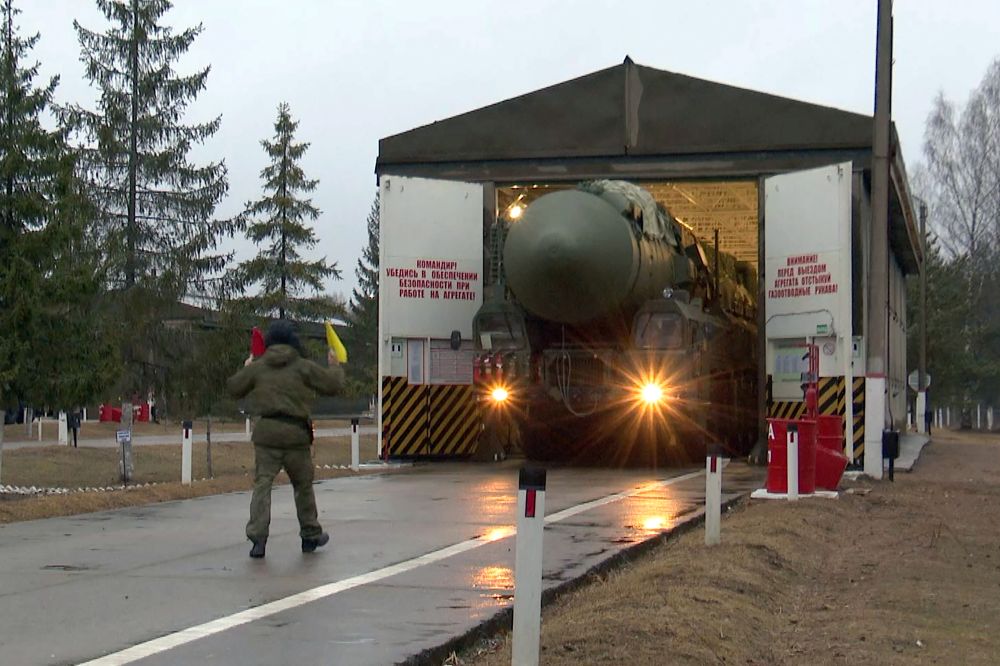
A particularly dangerous precedent set in The Russo-Ukraine War is the normalization of Russia’s nuclear threats and brinksmanship, which has included threats of nuclear use to alter or prevent adversary behavior, the armed capture of nuclear energy facilities, and drone attacks on such facilities. Both Russia and North Korea can fall prey to Oversensitivity to Consistency, erroneously learning that they can wield such explosive rhetoric and undertake such escalatory actions to positive effect without negative consequence. This is also an example of Normalcy Bias in that it involves the inability to plan for incremental risk. If the Kim Regime were to apply these principles to acts of coercion on the Korean Peninsula, it could quickly trigger horizontal and vertical escalation leading to widescale conflict and loss of life.
Unsettling Possibilities for Future Korea
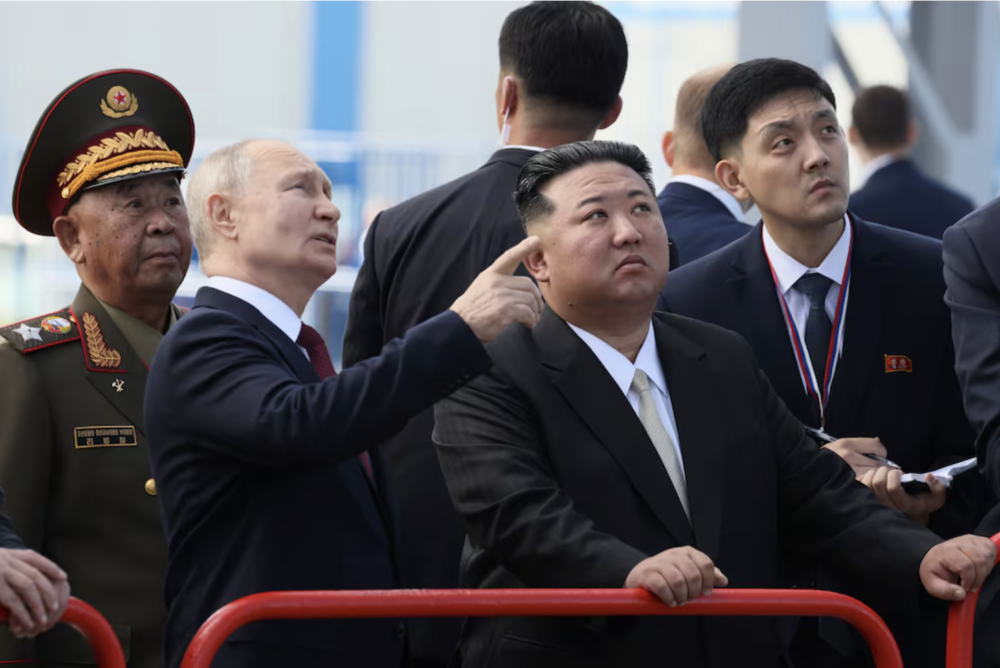
North Korea’s participation in The Russo-Ukraine War has bestowed the beleaguered, isolated regime with game-changing diplomatic, financial, and military benefits. Pyongyang was already in the midst of a significant policy shift by pivoting away from denuclearization-based rapprochement with the U.S. and South Korea. The Kim Regime, emboldened by its strategic partnership with Moscow, has renounced reunification with South Korea and disavowed denuclearization. Now playing the same two sides against the middle that his grandfather played in the cold war, Kim Jong Un has more bargaining power, status, and firepower than Pyongyang has had in a generation. Coupled with the superpower rivalries swirling around The Korean Peninsula, the present situation is especially ripe for cognitive biases to proliferate and undermine stability.
The new configuration of motivations, relationships, and capabilities has scrambled deterrence dynamics. Failing to adapt would therefore constitute Plan Continuation Bias.
But accounting for the shifting threat perceptions and risk profiles of adversaries is a particularly vexxing challenge. It is not sufficient to merely understand how bias impedes one’s own thinking; it is also necessary to understand how bias affects one’s adversaries. In these confusing and opaque conditions, which are also rife with deception and secrecy, analysts and policymakers are especially vulnerable to Mirror Image Bias, the misperception that others think like oneself.
The current paralysis is an offshoot of all sides succumbing to Confirmation Bias and Hostile Attribution Bias since all parties tend to perceive adversary actions as hostile and tend to overlook and distrust potential opportunities for de-escalation and normalization.
It will be especially challenging to understand regional adversaries in the current informational and diplomatic blackout, which lacks crisis communication channels and confidence building measures such as the U.S. had in the Cold War with the Soviet Union. These last-ditch safety valves are essential for steering contingencies off a collision course once escalation dynamics take hold. Without better communication practices, personal relationships, and institutional connectivity, it is very likely that Illusion of Transparency can cloud judgments and confuse the decision space.
Just as the U.S. misunderstood the nature of adversary cooperation during The Korean War, it is quite plausible that the U.S., South Korea, and Japan could once again under or overestimate North Korean and Russian coordination with China in a future contingency over Taiwan. Importantly, any conflict in Northeast Asia could quickly expand to two-fronts even without forward coordination between Beijing and Pyongyang.
The Kim Regime is no doubt observing cracks in the international order and emboldened by support from Russia and China plus its advancing nuclear weapons capabilities. It could therefore overestimate its ability to use threats and coercion to achieve political goals - Optimism Bias. In particular, rather than wait for more incremental and gradual benefits achieved through diplomatic normalization, the Kim Regime could prefer to use lethal aggression to shape a new normal. This would be an example of Hyperbolic Discounting, a preference for short-term gains over long-term ones.
Decisionmaking in war and peace invariably has an emotional component. The Hot-Cold Empathy Gap describes the underestimation of visceral drives on behavior. The Kim regime may mistakenly expect that the U.S. and its allies will immediately stand down when presented with a fait accompli achieved through threat or use of force. Even if the rational decision is to stand down, that does not mean that this is the course that the U.S. and South Korea will take. President Truman’s decision to intervene in Korea in 1950 had an emotional facet. When he learned about the North’s invasion, he said, “we have to stop those sons of b****** no matter what…” He later considered the decision to enter war in Korea as the most difficult of his presidency.
In the past, U.S. experts and policymakers have vacillated between casting China as the singular solution to Korean Peninsula tensions – Wishful Thinking – or as a saboteur that has zero overlap in interests with the U.S. and its allies - Hostile Attribution Bias.
One crucial reason why the U.S. downplayed both China’s willingness to fight in 1950 and Russia’s willingness to fight in 2022 was a failure to appreciate that leaders facing losses are more prone to accept risks - Loss Aversion. It is not difficult to imagine scenarios in which Kim Jong Un is contending with internal and external sources of pressure and therefore decides to lash out.
Groupthink describes an intragroup dynamic in which irrational ideas flourish due to the pressure to conform. Availability Cascade is a process wherein an idea, despite its flaws, gains viability through its repetition and endorsement. Kim, Putin, and Xi are coconned in an affirming media environment and surrounded by top level bureaucrats disincentivized from questioning their leadership. This type of information ecosystem can lead to decision-making that privileges personal motivations over national benefits and leads to adventurist foreign policies that flout international norms and undermine regional stability.
Conclusion
This article has examined bias-related lessons from The Korean War and The Russo-Ukraine War and applied these lessons to future Korean Peninsula contingencies. Failing to learn from this history could result in its unfortunate repetition.
Jonathan Corrado is director of policy for The Korea Society, nonresident senior fellow in the Indo-Pacific Security Initiative at the Atlantic Council’s Scowcroft Center for Strategy and Security, and lecturer of international and public affairs at Columbia University. The views expressed here do not necessarily reflect those of his affiliations.