- #North Korea
- #US Foreign Policy
- #US-ROK Alliance
Key Takeaways:
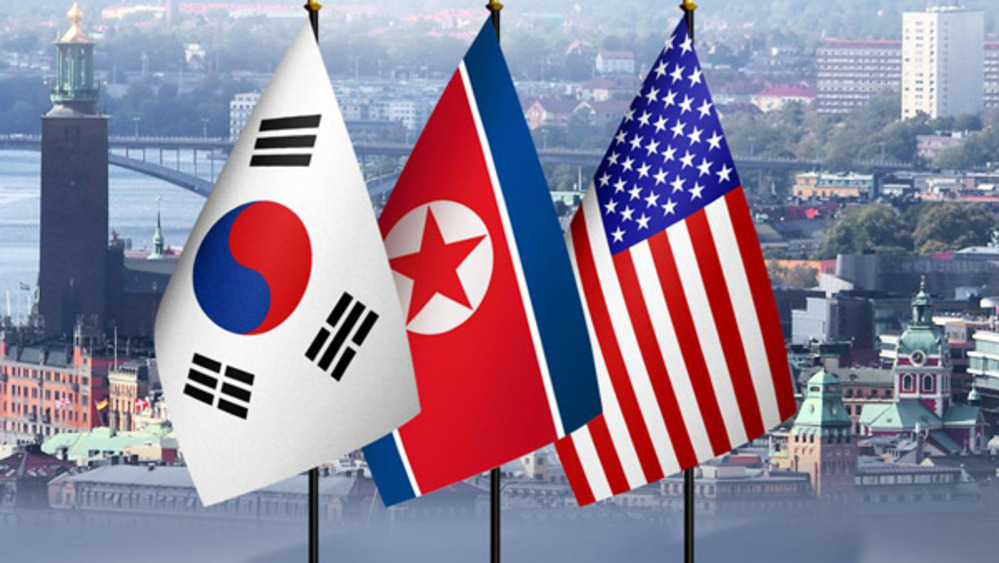
- Should President Trump, under any conditions (hopefully including CVID), agree to meet with Kim in Korea, he should insist that it be a trilateral meeting including South Korean President Lee Jae Myung (who is otherwise very supportive of a Kim-Trump Summit).
- If Trump insists on another private bilateral meeting ... I would suggest Trump invite Kim to meet on US territory; after all it’s Kim’s turn to come to Trump. I would further suggest Guam as an ideal meeting place
- When it comes to North Korea, the US/South Korea are in the driver seat; they, and not Pyongyang, should be driving the agenda.
What in the world is going on? It was not that long ago when North Korean dictator Kim Jong-Un was seen and treated as a pariah. Moscow shunned him, Beijing treated him as a ungrateful supplicant, and Washington made it clear that the cost of progress in its relationship with Pyongyang was movement, perhaps not immediately but still as a goal (or at least as a possibility), toward CVID: complete, verifiable, irreversible denuclearization.
Fast forward to today: Russian President Vladimir Putin comes to Kim with hat in hand, Chinese President Xi Jinping gives Kim a place of honor at his major parade commemorating the 80th anniversary of the end of WWII, and US President Donald Trump is heard literally begging Kim to meet with him during Trump’s recent visit to Seoul. Suddenly, Kim Jong-Un is everybody’s favorite prom date.
The Russian turnaround is easiest to explain. Putin desperately needs Pyongyang’s help, in the form of ammunition and cannon-fodder troops, in his thus far unsuccessful effort to subjugate Ukraine. Meanwhile, Xi seems concerned that Kim will play a Russia card against China’s interests and is openly wooing him, despite the embarrassment it should have caused the other international visitors to his gala parade. (If dignitaries like Indian Prime Minister Modi were not informed in advance that they would share a podium with Kim, they should be incensed. If they were advised and came anyway, they should be embarrassed.)
Most unsettling of all has been President Trump’s (over)eagerness to resume his bromance with Kim, even as Kim has thus far spurned his advances, warning that the US must first get over its “delusional obsession with denuclearization” before he is willing to sit down, as an equal, with the world’s most powerful leader.
Why President Trump is so eager to meet again with Kim, given the fruitlessness of his previous encounters, is anyone’s guess. Some speculate this is part of his very transparent drive to obtain a Nobel Peace Prize. Perhaps, but if so, it could have the opposite effect (more on this point later).
Others fear it is a first step toward terminating or at least seriously downgrading or refocusing the long-standing US-ROK alliance that has kept the peace on the Peninsula for over 70 decades. Those concerns were somewhat (but not completely) alleviated by Trump’s statements during his late October visit to both Korea and Japan, which underscored the importance of the US defense relationships with both allies to regional and global peace and security.
If he meant what he said, and I am prepared to take him at his word, then his administration needs to proceed cautiously with future overtures toward Pyongyang.
First and foremost, the Trump administration needs to make it crystal clear that its long-term goal remains Korean Peninsula denuclearization. To abandon this goal is to accept North Korea as a de facto nuclear weapons state, which would undermine the international non-proliferation regime. It would also most likely open the nuclear door for South Korea, perhaps Japan, and most likely for Taiwan as well. This would reverse decades of US policy and strategic thinking. Should the administration decide that nuclear proliferation among its allies is in America’s best interest, this policy reversal should come about as a result of serious deliberation; it should not happen as a side effect of some visit. Once the nuclear genie is deliberately let out of the bottle in Northeast Asia, we should expect to see its emergence elsewhere around the globe as well.
Should President Trump, under any conditions (hopefully including CVID), agree to meet with Kim in Korea, he should insist that it be a trilateral meeting including South Korean President Lee Jae Myung (who is otherwise very supportive of a Kim-Trump Summit). When Trump last meet with Kim Jong-Un in the Korean DMZ in June 2019, then-South Korean President Moon Jae-In was allowed to appear for a brief photo op and then waited in the car while Trump conducted a 53-minute private session with Kim. This was not only truly insulting to Moon and the people of South Korea but also fed into Pyongyang’s long-standing narrative that South Korea was a mere vassal of the United States and not a sovereign entity in its own right.
The above comment assumes Trump and Kim will again meet in the DMZ. It’s hard to imagine Kim agreeing to come to South Korea and a Trump trip to the North, after having previously stepped into North Korea during the DMZ visit, would also further Pyongyang’s narrative that Kim Jong-Un is a highly important, powerful world leader and that Washington is at his beck and call.
If Trump insists on another private bilateral meeting, then it should not happen on the Korean Peninsula. I would suggest Trump invite Kim to meet on US territory; after all it’s Kim’s turn to come to Trump. I would further suggest Guam as an ideal meeting place, where Kim could witness, firsthand, the extent of US air power (and air defenses) readily available to the US should he ever contemplate an attack on a US ally (Korea or Japan) or US territory.
I have great admiration for President Trump’s efforts to bring peace to the Middle East, first through the Abraham Accords and now through his UNSC-endorsed 20-point ceasefire peace plan. If the Gaza ceasefire holds and hope remains for an eventual Palestinian state, that alone should more than justify his being awarded the Nobel Peace Prize.
The best way to ensure that such a prize will never be awarded, however, would be to take steps that would ultimately legitimize North Korea as a nuclear weapons state, while letting additional nuclear dominos fall. Instead of being a demonstration of “peace through strength,” such a move would qualify Trump to become the new international poster child for appeasement as the 21st century version of Neville Chamberlain. When it comes to North Korea, the US/South Korea are in the driver seat; they, and not Pyongyang, should be driving the agenda.
Ralph A. Cossa is Chairman, President Emeritus, and Worldwide Support for Development-Handa Haruhisa Chair in Peace Studies at the Pacific Forum, a Honolulu-based foreign policy research institute.
