- #North Korea
- #Nuclear & Missile Issues
- #US Foreign Policy
Key Takeaways:
- North Korea’s policy evolution demonstrates how favorable external conditions — improved relations with China and deepening ties with Russia, and increased leverage with both amid great-power competition — have emboldened Kim to take a series of bold policy moves.
- In the near term, Seoul should prioritize managing the North Korean threat; over the long term, however, it should craft policies for dealing with a permanently nuclear-armed North Korea.
- A central element of Seoul’s considerations should be alliance modernization, which is already in motion, and may require South Korea to reassess its defense posture and capabilities, particularly if alliance modernization significantly alters US extended deterrence requirements.
As painful as it is to acknowledge, North Korea has effectively won its prolonged battle against denuclearization. Having codified continued nuclear development in its 2023 constitution, Pyongyang now invokes constitutional authority to defy any diplomatic attempt at supporting its denuclearization. Even China and Russia — UN Security Council members and once staunch supporters of denuclearization — appear to have either given, or are moving toward, tacit recognition of North Korea’s nuclear status.
Signals from the United States and South Korea are mixed. The latest US National Security Strategy (NSS) omits any mention of “North Korea” or “denuclearization” — a stark departure from the 2017 and 2022 versions. South Korea’s new three-point policy calls for a “nuclear-free Korean Peninsula,” conspicuously dropping the term “denuclearization” in an apparent diplomatic appeal to Pyongyang while not altogether renouncing denuclearization as a policy goal. By contrast, the "END Initiative" announced in September explicitly includes "denuclearization" (END: “exchange, normalization, and denuclearization”). Yet both governments officially continue to maintain denuclearization as their policy goal. Regardless of the exact meaning of these mixed signals, there is one clear takeaway: denuclearization has lost momentum. And we can bet this is not lost on the North Korean leadership.
Against this backdrop, the natural questions for South Korea’s Lee Jae Myung government are: Will its North Korea policy work? What can Seoul do to ensure peace on the Korean peninsula?
A View from North Korea: Different Security Environment, Different Strategy
First, it would be useful to begin with some context — specifically, North Korea’s changed perception of its security environment and why Seoul’s overtures will likely fail.
One stereotype about North Korea is that it never changes. Its foreign policy reorientation over the past three years proves otherwise.
Two factors drove this shift: the collapse of the Hanoi summit and declining US global leadership. Both appear to have prompted the North Korean leadership to fundamentally reassess America’s strategic value.
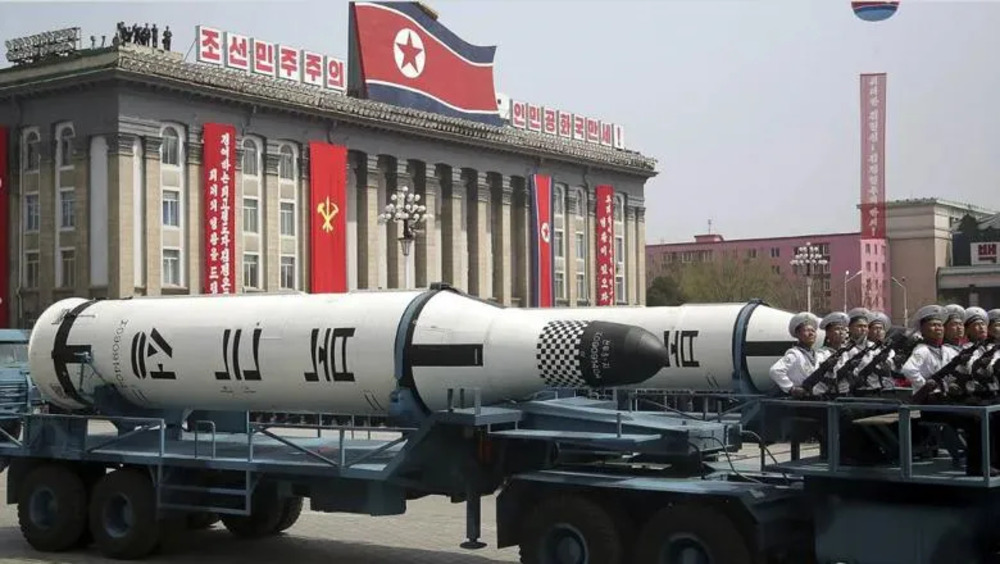
The Hanoi failure has profoundly affected Kim Jong Un’s view of the United States. Within weeks, he revived “self-reliance,” a policy synonymous with diplomatic isolation. This marked the beginning of Pyongyang’s conservative shifts across all policy domains, domestic and foreign, reinforced by multi-year border closures during the pandemic. The nuclear-heavy five‑year defense development plan unveiled in 2021 all but formally renounced denuclearization. Then, in fall 2022, North Korea revised its nuclear law, paving the way for preemptive nuclear strikes and expanding the scope of nuclear use to implicitly include South Korea. That same day, Kim told the parliament that a “line of no retreat” had been drawn and there would “be no longer any bargaining” over the country’s nuclear weapons. This was in effect a reversal of Pyongyang’s three-decade policy of seeking normalization of relations with the United States by working toward denuclearization, marking a watershed moment in its foreign policy.
Equally significant was North Korea’s realignment with China and Russia. Since the end of the Cold War, North Korea had sought to normalize relations with the United States through denuclearization, hoping to use Washington as a buffer against its giant neighbors. This began changing in summer of 2021, when North Korea’s Foreign Ministry website started to support Chinese and Russian positions on key international issues — which turned out to be a key signal of policy reorientation. Russia’s February 2022 invasion of Ukraine only accelerated this realignment. Notably, the pivot coincided with the chaotic August 2021 US withdrawal from Afghanistan, which North Korea interpreted as evidence of US decline.
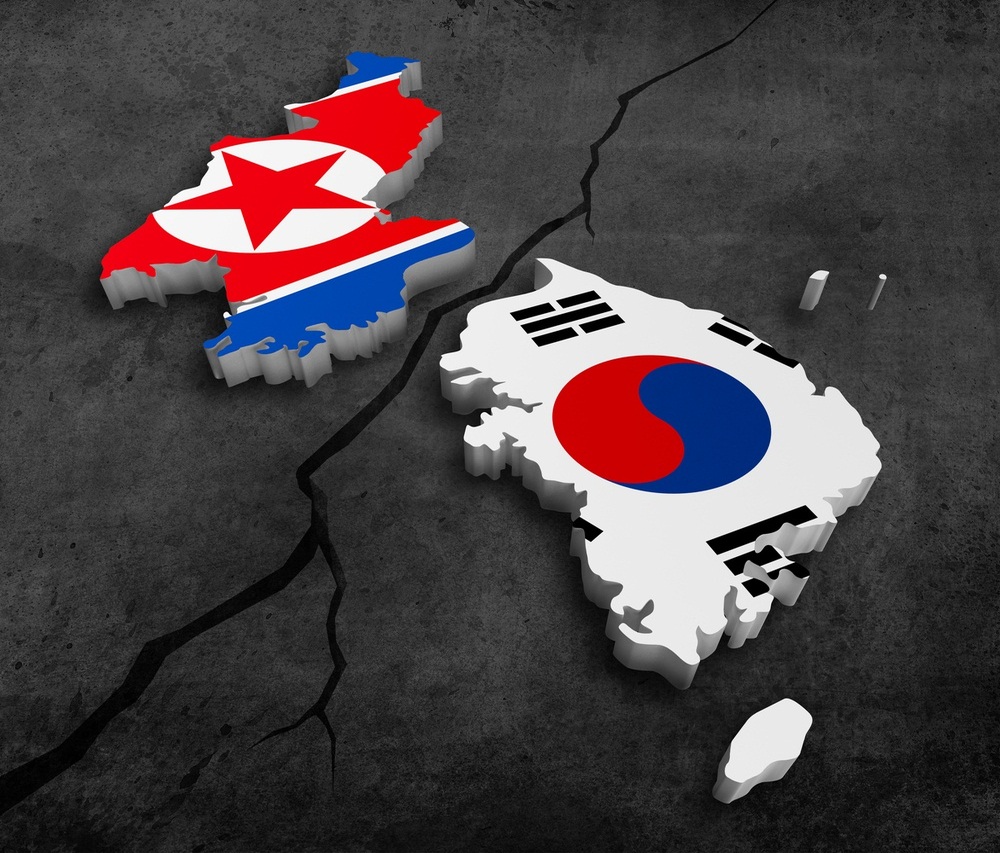
It is within this broader foreign policy recalibration that Kim Jong Un announced a two Koreas policy in December 2023, defining inter-Korean relations as those “between two belligerent states” and renouncing peaceful unification. In doing so, he trashed his grandfather Kim Il Sung’s seminal 1972 “Three Principles of National Reunification.” This break was not sudden — it represented a strategic shift that began after Hanoi and had been in motion for four years. The disappearance of unification language from propaganda; institutional downgrades of inter‑Korean bodies; the development of tactical nuclear weapons aimed primarily at the South; and the adoption of “ROK,” South Korea’s official name, to frame Seoul as a foreign country, all preceded the formal policy announcement. This means Kim is highly unlikely to reverse this policy during his tenure.
North Korea’s policy evolution demonstrates how favorable external conditions — improved relations with China and deepening ties with Russia, and increased leverage with both amid great-power competition — have emboldened Kim to take a series of bold policy moves. This new security environment leaves Washington with little to offer Pyongyang. South Korea has even less.
South Korea’s Options
A transformed North Korea demands a new approach. The Lee government’s policy, though well-intentioned, is highly unlikely to elicit any positive response from Pyongyang. While North Korea has not specifically commented on the END Initiative or the more recent three-point policy centered on peaceful coexistence, shared growth, and a war- and nuclear-free Korean Peninsula, it has already dismissed the Lee government’s overtures. In September 2025, Kim Jong Un reaffirmed that unification was off the table and vowed to enshrine that position in law.
Seoul’s current approach also rests on two outdated premises: that North Korea remains interested in an inter-Korean framework, and that denuclearization is achievable in the long term.
In the near term, Seoul should prioritize managing the North Korean threat. Over the long term, however, it should craft policies for dealing with a permanently nuclear-armed North Korea. Denuclearization is, and will remain, a deeply polarizing political issue. Putting politics aside, policymakers need to look squarely at this reality and proceed from there. This means moving beyond an exclusive focus on denuclearization and concentrating instead on South Korea’s broader policy options. That, in turn, inevitably means placing all options on the table, from sustained diplomacy to exploring advanced independent deterrence options.
A central element of Seoul’s considerations should be alliance modernization, which is already in motion. The Trump administration’s position on US Forces Korea’s “strategic flexibility” and the latest NSS both clearly signal that South Korea will bear greater responsibility for defending the security of the Korean Peninsula. This shift, and any future changes, may require South Korea to reassess its defense posture and capabilities, particularly if alliance modernization significantly alters US extended deterrence requirements.
In the short term, South Korea should continue working with likeminded countries such as the United States and Japan to curb the North Korean nuclear threat. One possible option is to convince Beijing and Moscow not to cross the red line of supporting Pyongyang’s nuclear program or proliferation activities. While success is unlikely, given both countries’ relations with North Korea and their apparent tacit (or near tacit) acceptance of its nuclear status, there may still be fault lines that can be exploited. Although North Korea has started taking initial steps toward rebuilding ties with China, after two years of strain since fall 2023, there are signs that the relationship may be recovering more slowly than anticipated. Similarly, Pyongyang’s growing dependence on Russia for military technology may be triggering the same anxieties it harbors about economic overreliance on China, potentially limiting the bilateral relationship in the future. Kim has already publicly warned against “dogmatism, imitation, and proclivity to import” in the work of weapons and equipment development.
These recommendations are not intended to denigrate the value of diplomacy with North Korea but rather to push the denuclearization discussion to a more forward-looking approach for South Korea in light of the changing strategic environment, including US-South Korea alliance modernization. In any case, close coordination and unified messaging between Washington and Seoul will be crucial.
Rachel Minyoung Lee is a Senior Fellow for the Stimson Center’s Korea Program and 38 North. She is also co-chair of the North Korea Economic Forum, which is part of the policy program at the George Washington University’s Institute for Korean Studies (GWIKS).